
That sudden amber glow on your dashboard can instantly ruin your day. The Check Engine Light is notorious for inducing anxiety, primarily because it is so vague. Is it a loose gas cap, or is your transmission failing? Without more information, you are left guessing—and worrying about the potential cost.
Fortunately, modern vehicles are equipped with a standardized system that allows them to communicate exactly what is wrong. By using an OBD-II (On-Board Diagnostics II) scanner, you can translate your car’s cryptic warning into actionable information. This tool empowers you to make informed decisions about repairs, saving you time, money, and unnecessary stress.
Understanding OBD-II Codes
To the untrained eye, a diagnostic trouble code (DTC) looks like a random string of characters, such as P0300 or P0442. However, there is a logic to this language. Each segment of the code provides a specific clue about what is happening under the hood.
The Breakdown of a Code
Most codes you will encounter follow a five-character format. Here is how to decipher them:
- First Character (System): The letter indicates which main system is experiencing the fault.
- P (Powertrain): Engine and transmission issues. This is the most common category.
- B (Body): Issues with the interior, airbags, or other body components.
- C (Chassis): Problems with suspension, steering, or brakes (ABS).
- U (Network): Communication errors between the car’s onboard computers.
- Second Character (Type): This tells you if the code is universal or specific to your car brand.
- 0: Generic code (standardized across all vehicles).
- 1: Manufacturer-specific code (unique to Honda, Ford, BMW, etc.).
- Third Character (Sub-system): This digit pinpoints the area of the fault. For example, a ‘3’ usually indicates an ignition system or misfire issue, while a ‘4’ often relates to emission controls.
- Fourth and Fifth Characters (Specific Fault): These numbers identify the exact component or problem description.
For example, in the code P0301, ‘P’ stands for powertrain, ‘0’ is generic, ‘3’ denotes the ignition system, and ’01’ specifically identifies a misfire in cylinder 1.
Step-by-Step Guide: How to Use Your Scanner
Using an OBD-II scanner is surprisingly straightforward. You do not need to be a certified mechanic to perform a basic scan. Follow these steps to retrieve your codes safely.
1. Locate the Diagnostic Link Connector (DLC)
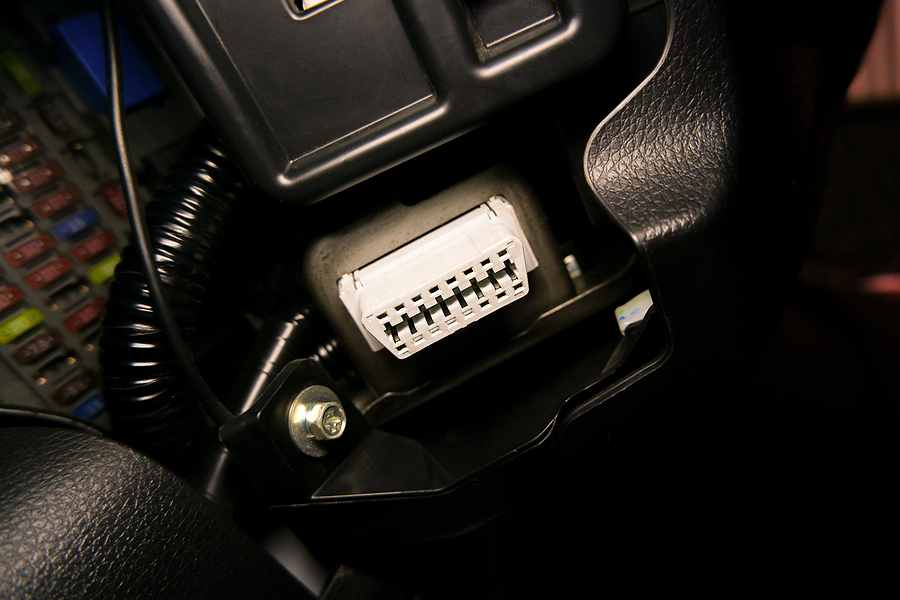
In most vehicles manufactured after 1996, the OBD-II port is located under the driver’s side dashboard, near the steering column. It is a trapezoid-shaped 16-pin connector. If you cannot find it, check your owner’s manual.
2. Connect the Scanner
Ensure your vehicle is parked safely. Plug your scanner’s cable into the port. It should fit snugly without forcing it.
3. Turn on the Ignition
Insert your key and turn it to the “On” or “Accessory” position. This powers up the dashboard lights and the onboard computer without starting the engine. Some scanners may require the engine to be idling, so refer to your device’s specific manual if you are unsure.
4. Scan for Codes
Follow the prompts on your scanner’s screen. Select “Read Codes” or “Scan.” The device will communicate with your car’s computer and display any stored Diagnostic Trouble Codes (DTCs).
5. Record the Data
Write down the codes exactly as they appear. If your scanner supports “Freeze Frame” data, record that as well. Freeze Frame data is a snapshot of the engine’s conditions (like temperature and RPM) at the exact moment the fault occurred, which is incredibly useful for diagnosis.
Get a Free Offer for Your Totaled Car Right Now ✅
Common Issues and Solutions
While there are thousands of potential codes, a few appear more frequently than others. Here is what some of the most common codes usually mean:
P0300: Random/Multiple Cylinder Misfire
This indicates that one or more cylinders are not burning fuel correctly. It can cause rough idling or shaking. Common culprits include worn spark plugs, bad ignition coils, or vacuum leaks.
P0420: Catalyst System Efficiency Below Threshold
This code relates to your exhaust system. It usually suggests that your catalytic converter is not functioning efficiently. While a bad oxygen sensor can sometimes trigger this, it often points to a failing catalytic converter, which can be a more expensive repair.
P0171: System Too Lean
A “lean” condition means the engine is getting too much air or not enough fuel. This is frequently caused by a dirty Mass Airflow (MAF) sensor or a vacuum leak in the intake manifold.
P0442: Evaporative Emission System Leak (Small)
This is one of the least severe but most annoying codes. It detects a leak in the system designed to capture fuel vapors. The most common cause? A loose or damaged gas cap. Tightening or replacing the cap often solves the problem.
Benefits of Using an OBD-II Scanner
Owning a scanner acts as a layer of protection between you and expensive car repair bills. It changes the dynamic of car ownership in several ways:
- Financial Protection: Mechanics charge diagnostic fees just to hook up their scanners. By doing this yourself, you can often identify simple fixes—like a loose gas cap—that cost nothing to repair.
- Informed Conversations: If you do need a professional, walking into the shop knowing the specific code (e.g., “I have a P0301 code”) shows you have done your homework, reducing the likelihood of being oversold on unnecessary services.
- Peace of Mind: The Check Engine Light is frightening because it is unknown. Knowing the severity of the issue immediately helps you decide if you need to pull over right away or if you can safely drive home.
Dealing with a Total Loss Vehicle
Sometimes, the diagnosis reveals a problem that costs more to fix than the vehicle is worth. In other cases, you might be scanning a vehicle after an accident to see if the internal electronics survived the impact.
If repair costs skyrocket, you may be facing a “total loss” scenario.
Understanding Actual Cash Value (ACV)
Insurance companies and buyers determine a car’s worth based on its Actual Cash Value (ACV). This is not what you paid for the car, but what it is worth today, accounting for depreciation. Factors affecting ACV include the make and model, mileage, accident history, and pre-crash condition. Cars depreciate quickly; some data suggests vehicles can lose over 20% of their value in the first year alone.
The Threshold for Total Loss
States have different laws regarding when a car is considered “totaled.” In Indiana, for example, the total loss threshold is 70%. This means if the cost to repair your vehicle exceeds 70% of its ACV, it is legally considered a total loss.
Selling a Totaled or Uninsured Vehicle
If you find yourself with a vehicle that is essentially a mechanical or structural write-off, repairs are often throwing good money after bad. Selling the vehicle to a specialized junk car buyer is often the smartest financial move.
- Immediate Payment: Unlike private sales where you have to haggle and wait, junk car buyers typically offer cash on the spot based on the weight and salvageable parts of the vehicle.
- Convenience: These services usually include free towing, which is essential if your car is not running or is unsafe to drive.
- Simplified Paperwork: Handling the title transfer for a totaled car can be confusing. Reputable buyers handle the administrative burden for you, ensuring the liability is transferred out of your name correctly.
Conclusion
The Check Engine Light does not have to be a source of panic. With a simple OBD-II scanner, you can demystify your dashboard, understand your vehicle’s health, and make smart decisions about repairs. Whether it is a simple sensor replacement or a signal that it is time to part ways with your car, having the right information puts you in control.
If your scanner reveals catastrophic issues, or if you are sitting on a car that costs more to fix than it’s worth, do not let it rust in your driveway.
Get paid cash for your junk car in Indianapolis today. Contact Us Now for a free junk car appraisal and turn that mechanical headache into cash in your pocket.
Related Post: What Your Dashboard Warning Lights Really Mean And When to Worry