
Buying a car involves navigating a maze of acronyms, and few are as important—or confusing—as those describing the drivetrain. Whether you see FWD, RWD, or 4WD on a spec sheet, these letters tell you exactly which wheels receive power from the engine.
This distinction changes how a car handles, how much fuel it consumes, and how safe it feels in bad weather. Understanding these differences ensures you choose a vehicle that fits your lifestyle, whether that is a daily commute in the city or a rugged adventure in the wilderness.
TL;DR and Key Takeaways:
For most drivers, a front-wheel-drive vehicle with good tires is sufficient. However, if you plan on towing heavy loads or navigating off-road trails, rear-wheel or four-wheel drive might be necessary. If you are short on time, here is the bottom line on drivetrain systems:
- Front-Wheel Drive (FWD): The most common system. It offers the best fuel economy and is generally safer for everyday driving in rain or light snow.
- Rear-Wheel Drive (RWD): Preferred for sports cars and trucks. It provides better handling balance and towing capacity but can struggle with traction on slippery roads.
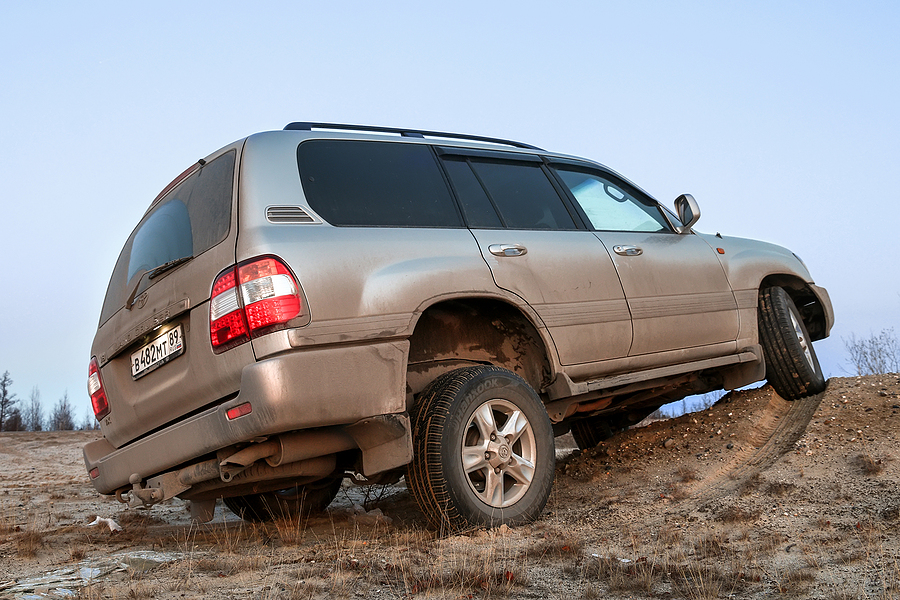
- Four-Wheel Drive (4WD): The go-to for off-roading. It uses a robust system with low-range gearing to handle deep snow, mud, and rocks, but it consumes more fuel.
Table of Contents:
- What is Front-Wheel Drive and How Does it Work?
- Why Do Some Performance Cars Use Rear-Wheel Drive?
- When Should You Choose Four-Wheel Drive Over Other Systems?
- Frequently Asked Questions
- Quick Recap
- Junk Car Removal in Indianapolis
What is Front-Wheel Drive and How Does it Work?
Front-wheel drive (FWD) means the engine sends power only to the front wheels, pulling the car forward.
This is the most common setup for passenger cars, crossovers, and minivans. In an FWD vehicle, the engine, transmission, and differential are all located at the front of the car. This compact design eliminates the need for a long driveshaft running to the rear, which frees up interior space for passengers and cargo.
The Benefits of FWD
The primary advantage of front-wheel drive is efficiency. Because the system is lighter and has fewer moving parts, it typically delivers better fuel economy than rear-wheel or four-wheel drive alternatives.
From a safety perspective, FWD is often easier for average drivers to handle. Since the weight of the engine sits directly over the driven wheels, these vehicles naturally have good traction in rain and light snow. If you lose traction in a corner, an FWD car tends to “understeer” (push forward), which is generally safer and more intuitive to correct than the sliding “oversteer” common in rear-wheel-drive cars.
Why Do Some Performance Cars Use Rear-Wheel Drive?
Rear-wheel drive (RWD) sends engine power to the back wheels to push the car, leaving the front wheels responsible only for steering.
While less common in economy cars today, RWD remains the standard for pickup trucks, luxury sedans, and sports cars. By separating the steering (front) from the power (rear), the vehicle achieves a better weight distribution. This balance allows designers to optimize the suspension for sharper handling and high-speed stability.
The Benefits of RWD
Performance is the main selling point here. When you accelerate hard, the vehicle’s weight shifts to the rear. In an RWD car, this weight shift presses the rear tires into the pavement, improving grip during acceleration. This is why high-performance vehicles rarely use FWD.
For truck owners, RWD is essential for towing. A trailer adds significant weight to the rear of the vehicle, which helps give the rear tires the traction they need to move heavy loads. However, without a heavy load or modern stability control, RWD vehicles can be difficult to control on slick or icy roads, as the rear end is prone to sliding out.
When Should You Choose Four-Wheel Drive Over Other Systems?
Four-wheel drive (4WD) uses a transfer case to send power to all four wheels, often with a “low range” setting for maximum torque.
It is important to distinguish 4WD from All-Wheel Drive (AWD). While AWD systems are always on and designed for on-road safety, 4WD is a more robust system designed for serious terrain. Traditional 4WD systems are “part-time,” meaning the driver must manually shift a lever or push a button to engage the front wheels.
The Benefits of 4WD
You should choose 4WD if you frequently drive off-road or in deep snow. The defining feature of 4WD is the transfer case, which usually offers 4-High and 4-Low settings.
- 4-High: Used for slippery surfaces like packed snow or dirt roads at normal speeds.
- 4-Low: Multiplies the engine’s torque to help the vehicle crawl over rocks, climb steep hills, or pull out of deep mud.
The trade-off for this capability is weight and stiffness. 4WD systems are heavy, which reduces fuel economy, and they can make the ride feel rougher on paved roads compared to FWD or AWD vehicles.
| Feature | FWD (Front-Wheel Drive) | RWD (Rear-Wheel Drive) | 4WD (Four-Wheel Drive) | AWD (All-Wheel Drive) |
|---|---|---|---|---|
| Traction | Good on dry pavements and slippery surfaces. | Enhanced performance on dry roads, less on snow or ice. | Excellent on extreme off-road terrains (when engaged). | Consistent traction on varying road conditions. |
| Handling | Stable and beginner-friendly. | Sporty, with potential for oversteer. | Less precise on paved roads, better for uneven terrain. | Reliable handling in most conditions. |
| Weight | Lighter, improving fuel efficiency. | Slightly heavier than FWD. | Heaviest due to added components. | Heavier than FWD but often lighter than 4WD. |
| Fuel Efficiency | Most fuel-efficient due to lighter drivetrain. | Less efficient than FWD. | Least fuel-efficient due to weight and complexity. | Generally more efficient than 4WD but less than FWD/RWD. |
| Best Use | Daily driving, urban and highway use. | Performance and rear-heavy loads. | Off-road adventures and extreme weather. | All-weather, all-purpose versatility. |
Frequently Asked Questions
Does 4WD or AWD cost more to maintain than FWD?
Yes, maintenance costs are typically higher for 4WD and AWD vehicles. These systems have more mechanical components—such as differentials, transfer cases, and additional driveshafts—that may require fluid changes or repairs over time. FWD systems are simpler and generally cheaper to service.
Is FWD or 4WD safer in the snow?
It depends on the depth of the snow, but 4WD offers better ability to get moving. 4WD helps you accelerate without getting stuck in deep snow. However, it does not help you stop or turn. A front-wheel-drive car with high-quality winter tires will often outperform a four-wheel-drive car with standard all-season tires when it comes to braking and cornering safety.
Can I tow with a Front-Wheel Drive car?
Yes, but with limitations. FWD vehicles generally have lower towing capacities than RWD or 4WD trucks. The weight of a trailer lifts weight off the front wheels, which can reduce traction and steering control in an FWD vehicle. Always check your owner’s manual for specific towing limits.
Quick Recap:
Here is a fast breakdown of how the systems compare:
- Efficiency: FWD wins. It is lighter and has less drivetrain loss.
- Traction (On-road): AWD or FWD is best for rain; 4WD is best for deep snow.
- Traction (Off-road): 4WD is the superior choice for mud, rocks, and uneven terrain.
- Performance: RWD offers the best handling balance for sports cars.
- Cost: FWD is usually the most affordable option to buy and maintain.
Conclusion
As you can see, each type of drivetrain has its own strengths and weaknesses. Ultimately, the best choice for you will depend on your individual needs and preferences. It’s important to carefully consider factors like weather conditions, terrain, driving style, and budget when deciding on a new vehicle.
If you live in an area with heavy snowfall or frequently drive off-road, 4WD may be the best option for you. If fuel efficiency is a top priority, FWD might be the way to go. And if you’re a thrill-seeker looking for optimal performance on the track, RWD could be your best bet.
Is your old car stuck in the driveway because the transmission failed or the 4WD system won’t engage? Whether it is a sedan, truck, or SUV, you can turn that vehicle into cash today. We offer hassle-free junk car removal in Indianapolis, Indiana. We will tow your vehicle for free and pay you cash on the spot, regardless of its condition. Don’t let mechanical issues slow you down.
Call now for a free quote!
Related Post: Essential Roadside Emergency Kit Checklist for New Drivers and Families